
By Sharon Fadzai Manangazira – June 2022
According to seminary book titled ‘Counsels on Stewardship’ under the chapter ‘Wills and Legacies,’ some to Ellen G White’s wills are made in “so loose a manner that they will not stand the test of the law…” it is against this background that the importance of establishing Family trusts for the benefit of our loved ones or those people near and very dear to us comes into play.
When entertaining thoughts to establish a Family trust, questions for consideration revolve around the status of personal wealth/ business in the event of death.
Put in another way, the other question could be what will be the status of your wealth/ business should you and your spouse die at the same time today? interestingly, what will be the status of your wealth/ business should your family be wiped away completely after tragedy strikes? Put differently what is your plan assuming all your children die before you?
What is a Trust?
This is a vehicle or instrument recognized at law as a ‘person’ constituted through a legal document known as a ‘trust Deed’. Assets are placed under the management of a trust by a Founder who transfers some/ all of his property into the trust’s name. The trust holds property or assets for a specific person or group, called the beneficiary. A trust is a separate legal persona. trust assets and incomes are not owned out rightly by trustees or founders thereof.
Examples of trusts include Family trusts, Charitable trusts and Community trusts. The major purpose of creating Family trusts is to protect and manage family assets/ businesses for both current and future generations. When we donate our assets into a family trust we no longer have legal ownership of them. The Assets are now, ‘owned and controlled’ by the trustees. Ownership and control of the Assets will reside in the ‘office’ of the trustees in their official capacities NOt personal capacities. This function they exercise for the sole benefit of the beneficiaries. trusts are usually associated with the province of the wealthy. however, there are actually many benefits to creating them, for all. trusts can help one manage his property and assets, make sure they are distributed after your death according to your wishes, and save your family money, time and paperwork.
How a trust is constituted
The following are the key focus areas:
(a) Engage the services of a notary public and not just a generic legal practitioner who is not registered by a Law Society of Zimbabwe as a notary public. it is important to verify the status of the notary public prior to the use of services from the Law Society of Zimbabwe. There are many people who are drafting trusts even in the streets but be extra careful as in most cases it’s simply a cut and paste approach without necessarily giving practical legal advice on the dangers that might arise due to your own unique setup.
(b) List your trust’s prospective names in order of preference and decide on a name for the Family trust.
(c) it is pivotal to appoint trustworthy, “trustees”. These are people who will manage and control the assets in the trust for you and with your best interests at heart. Once identified obtain the Full Name, Date of Birth, iD Number, and Physical addresses of the trustees.
(d) identify the specific assets like real estate or high-value items you want to immediately donate to the trust and the specific details thereof, for example:
– title deeds for immovable properties whether in-country or offshore;
– dividends from shareholding held on companies listed on the ZSE, JSE etc.
– foreign currency held in bank accounts whether in-country or offshore;
– surplus revenue obtained from incomegenerating projects and/or
– business structures are otherwise known as “madhiri” in street lingo
(e) Determine the beneficiaries. These are people whom you would want to benefit from your personal wealth.
Advantages of a Trust
A trust has its own legal personality – This means that family trusts are capable of entering into binding contracts as well as suing or being sued by individuals and artificial persons alike. The structure of a trust provides privacy (unlike in a company) – There is no legal requirement to submit returns of any nature to the Registrar of Companies as is the case with companies. The trust affords the Founder a certain assurance of asset protection. in the event that a Founder develops mistrust as it relates to trustees, the Founder can ensure that through the provisions of the trust there are conditions and precedents that need to be met before any property that is vested in the trust is disposed of.
There is flexibility in distributions among beneficiaries – The decision to apportion which property to a specific beneficiary lies squarely with the founders of the trusts. There is no need to incur financial costs in undertaking transfer processes to an heir who is already a beneficiary of a trust. A trust thus, provides for a smooth and quick transition of assets to the next generation. it affords greater flexibility in that a trust is capable of catering for future expected or unexpected circumstances that may occur i.e. death, family expansion, and insolvency, legislative changes e.g. Marriage Bill or Succession Laws

By Theresa Muchinguri – June 2022
A board of persons, a coming together for a common lawful purpose of two or more persons. Prima facie implies a concurrence or coming together of at least two or ‘meeting’ may be defined as an assembly more persons so that a general rule, one person cannot constitute a meeting applies. it is axiomatic that there be must be at least two persons present to constitute a meeting Meetings of all kinds, including Board meetings, are subject to the enabling instrument (Statute or AoAss.), the regulations applicable to the particular body and the common law. Meetings should be guided by a Board Annual Workplan. Common law only applies in the absence of any statutory enactment or codified regulations. For proceedings at a Board meeting to be validly conducted, the meeting must be properly convened. Proper Convening means that the meeting must be called by the proper authority.
All persons entitled to receive notice of the meeting must be duly served therewith unless they have expressly waived their right. All Board meetings. Special meetings are convened through the Chairman. Duly constituted means that the proper person must be in the Chair, and a quorum must be present. Key Elements of Meeting include notice, agenda, quorum, motions, voting & resolutions as well as minute taking. Chairman’s role is usually to set the agenda with CEO and Board Secretary’s guidance and seek input from team members. The chairman may also ask members to suggest agenda items along with a reason why each item needs to be addressed in the meeting. Should the chairperson ultimately decide not to include an item, they need to be accountable — explain the reasoning to the member who suggested it.
Chairperson Key Roles in a board meeting include
2. Fair-mindedness and ability to arrive at correct decisions on the spur of the moment;
3. Ability to express with facility and discretion the mind of the meeting on the particular issue under discussion;
4. Ability to preside over deliberations and be ready to guide the meeting into decisions that are good for the entity, shareholders and stakeholders and be careful to subordinate his own views to those of the meeting.
5. Ability to preserve order and keep the meeting focused guided by the agenda;
6. Ensure proceedings are conducted in the prescribed manner;
7. Provide everyone who is desirous to speak with an opportunity to do so and ensure the discussion does not drift and should at once suppress any irrelevant or offensive remarks;
8. Allow members to individually vote on motions
9. Must remain impartial.
10. Must be familiar with the regulations of the entity over which she presides. A minute is prepared so that the motion and resolutions taken at a meeting can be used as a reference in the future. it is a legal requirement for companies to keep minutes of the board meetings, committee meetings, and annual general meetings.
Minutes of meetings must be recorded, entered into a book or file, and signed by the Chairperson. The minutes of the meeting must contain the name of the meeting styled as “Minutes of the annual general meeting”, Minutes of the extraordinary general meeting”, Minutes of the Board Meeting” etc.
Adjourned Meeting
An adjournment, if bona fide, is only a continuation of the meeting… and the notice that was given for the first meeting holds good for the other meetings following it. No new business can be introduced when the meeting resumes as this is a continuation of the previous meeting unless notice of such new business is given and there are no objections from members. if however the meeting is adjourned sine die, a fresh notice must be given for the new meeting. it may be caused by the resolution of the meeting, the action of the Chairperson, Failure to make a meeting (no quorum); Failure to keep a meeting (failure to keep a quorum) ;
Voting
All acts, matters, or things authorized or required to be done by the Board may be decided by a majority vote at a meeting of the Board at which a quorum is present. At all meetings of the Board, each member present shall have one vote on a question before the Board and, in the event of an equality of votes, the chairman shall have, in addition to a deliberative vote, a casting vote
A Board Member with a Conflict of interest cannot vote on such a matter where an interest has been declared.
Resolution
A formal proposal that is considered by an organization and is usually voted on at a meeting. A resolution during a meeting is any type of action taken by the members that will apply to a certain action. During a shareholders or directors meeting, any resolution that the entity’s Chairman and the secretary approve is called a certified corporate resolution. If an external organisation, such as a bank, needs verification from the corporation to allow certain actions to take place, this type of resolution is important. Examples of certain actions that may require certified corporate resolutions include the authorisation to sign documents on the entity’s behalf.
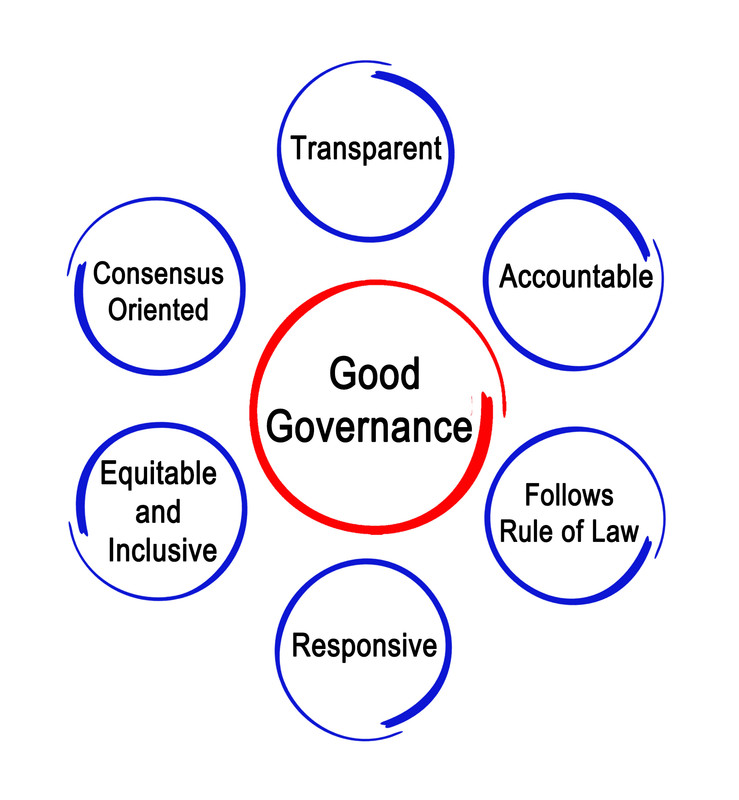
Corporate governance is the system by which business corporations are directed and controlled. The corporate governance structure specifies the distribution of rights and responsibilities among different participants in the corporation, such as the board, managers, shareholders and other stakeholders, and spells out the rules and procedures for making decisions on corporate affairs. By doing this, it also provides the structure through which the company objectives are set and the means of attaining those objectives and monitoring performance
By Ray Mwando

One by an employee is “I’m just doing my job”. Firstly, “just” implies a of my most dreaded comments certain ceiling of mediocrity. Secondly, it can indicate a lack of professional investment in the organisation and its role. What if this person was fully invested, and confident of the positive impact that she is having on the organisation, its clients, her colleagues, and the wider community? That does not suggest that sometimes we are not faced with difficult situations. Rather than defending ourselves behind a role or job description, what if we helped our colleagues develop the trust in themselves and authentic reflective practices that lead to improved decision making?
What leaders need to do at all levels to support a progressive mindset and skills development –
Leaders need to surround themselves with experts in areas where they themselves lack expertise. it is important to let these colleagues know that we rely on them to guide critical decision-making.
When we hire entry-level employees, leaders need to explicitly invite these colleagues to provide feedback, particularly with their “fresh eyes”.
Leaders should implement intentional feedback processes that are frequent, informal, and specific, where feedback flows both ways.
Leaders need to constantly demonstrate a commitment to the organisation’s identity and mission.
Leaders can design retreats for both team building and goal-setting, fostering a fertile environment for taking initiative.
Leaders should provide intentional opportunities for authentic and practical leadership.
Expanding on the last point, organisations sometimes miss out on benefitting from the expertise in all areas. it is one thing to be able to cognitively and theoretically study leadership, but quite another to take on even a short-term leadership role.
From a neuroscientific perspective, this practical experience can reveal unintended or intended narratives about us and about perceptions — ours and the perceptions of others. it can be uncomfortable, and extremely rewarding.
With this imperative for leaders to provide these opportunities, it highlights the implied consequence that the value of ideas and creativity of these evolving leaders must not be affected by the seniority or ego of the CEO or other senior leader.
A very practical example at Harare international School is related to our newly developed Strategic Priorities. it might seem natural to leave the realisation of these priorities in the hands of the Board, the director, or the senior leadership team.
But by putting the innovative implementation in the hands of a team of colleagues who interact with broader and more diverse constituent members, we increase the chances of magical serendipity of recognising and acting up ideas that might otherwise have been missed.
By empowering this dynamic team to realise these goals without overly constraining the “how”, creativity is valued. And as a result, we never need to hear: “I’m just doing my job.” instead, every member of the organisation feels that emotional tug that reflects an organisation that is more than the sum of its parts.
By Taona Sibanda – June 2022
We professionals, but what is a profession? The word is very imprecise. At one extreme it may mean any calling or vocation hence we have infrequently encountered people randomly calling themselves professionals to justify their integrity in business.
On the other hand, a profession may embrace only such callings as law and medicine yet from whichever dimension one looks at it, there has never been any doubt that there is a need to preserve certain fraternities as professions. in Britain, up to the 19th century, only the church, the law and medicine were regarded as professions (they were the learned professions). Today an examination of various vocations and callings guides us in understanding what fits into the idea of a profession as opposed to trading activities.
The essential difference between professional and trading activities lies in the functions involved. There is a difference, for instance, between the supply of furniture or groceries and the supply of skilled advice on the basis of trust and confidence. For this reason, it has been noted as follows: “Professions and business have traditionally been contrasted. The professional is seen as oriented not to personal profit but to disinterested tasks like the advancement of knowledge. “Professionalism involves limitations on the aggressive pursuit of self-interest. Professionals subordinate their financial interests to the interests of the public, especially to people who need help.” Against this background, a profession has been defined as a vocation founded upon specialised educational training, the purpose of which is to supply disinterested counsel and service to others, for direct and definite compensation, wholly apart from expectation of other business gains.

Members of a profession behave professionally by acting in a way that accords with accepted professional standards. One such standard is the independence of the profession. Professions, whatever their nature, may be succinctly defined as a self-regulating body of people whose members: Are recognised as having some special skill or learning in some field of activity in which the public needs to be protected against incompetence; Are identifiable by reference to a register or record; Belong to a representative organisation that sets and enforces professional standards; Perform advisory functions and accept personal responsibility for their advice; hold themselves as willing to serve the public and; Submit to a set of rules which impose higher standards of conduct than those required by law of the ordinary citizen.
Some of these rules are set in tablets of stone but others are subject to change over the years to reflect the changes in society generally and the role of professionals in society. Among those cast in iron is the independence of professionals in assisting the public. Clearly, the independence of a profession is imperative. It safeguards a peculiar kind of relationship between professionals and those who do not belong to the profession.
The relationship is peculiar in that it arises from the complexity of the subject matter which, by its nature, deprives the client of the ability to make informed judgments on his own and so renders him to a large extent dependent upon the professional man. When third parties interfere in this delicate relationship by tampering with the independence of professional men in professional pursuits, society will be at serious risk. Taona Sibanda is an Advocate of the Superior Courts of Zimbabwe practicing at The Temple Bar Chambers in Harare.
He is contactable on his email address taonasibanda@gmail.com or on WhatsApp at +263 715015607.

MASTERCALSS – BOARD AUDIT COMMITTEE WORKSHOP
Date: 29 – 30 September 2022
Venue: Tamarind Lodge, Kariba